
The Debt To Freedom blueprint gives you a simple, step‑by‑step plan to break free from debt and build long‑term financial stability.
This guide gives you a step-by-step system that removes confusion. Follow it and see results.
Here is the scenario you face
You feel trapped by debt. Bills arrive. Interest grows. Your savings stay tiny, and you start to worry at night. You want things to change. But not sure how to make it happen.
I’m here to tell you that what you need is a plan that works and a set of steps you can follow to help you feel less overwhelmed and in control.
This guide gives that plan. It gives clear steps and tools to do it.
1. Decide Your Goal
State the goal. Make it specific.
Example goals
- Pay off $5000 in 6 months.
- Remove one credit card balance in 90 days.
- Build $1,000 emergency savings in 3 months.
Action Steps:
- Write one goal on paper. Include a date.
- List all debts with balance, interest rate, and minimum payments.
- Add monthly income and fixed expenses.
- Find the amount left each month after bills.]
Why this matters
A clear goal makes choices simple. You choose which spending to cut. You choose which debt to attack first.
2. Know Your Amounts
You must know the exact figures.
Create your Debt Snapshot
- Lender name
- Balance
- Interest rate
- Minimum payment
- Due date
Create your Cash Flow Sheet
- Monthly income total
- Rent or mortgage
- Utilities
- Food
- Transportation
- Minimum debt payments
- Other recurring expenses
Action Steps:
- Use one spreadsheet. Put debts on top. Put income below.
- Subtract expenses from income. The remainder is your available paydown money.
- If the remainder is negative, find 3 expenses to cut this month.
Resource Suggestion
Use Google Sheets or Excel. Build a tab for debts and one for the monthly budget. Label it. “Debt To Freedom Tracker.”
3. Pick a Strategy
Two simple methods work. Pick one.
Method A: Fast psychological wins: Pay off the smallest balance first. This method is called the Snowball Method.
- Make minimum payments on all debts.
- Put all extra money on the smallest balance.
- When it is paid, roll that amount to the next smallest.
Method B: Save more on interest. Pay off the highest interest first. This method is called the Avalanche Method.
- Make minimum payments on all debts.
- Put extra money into the debt with the highest interest rate.
- Repeat until all high-interest debts are gone.
Which to use
- If you need momentum, choose Method A. If you want to save the most interest, choose Method B.
Action step:
- Pick a method and write it on your tracker.
4. Cut Expenses
Find money without new income.
Quick cuts (do these now)
- Cancel unused subscriptions.
- Pause streaming services for a few months.
- Meal plan for 2 weeks; cook at home.
- Use public transit or carpool some days.
- Sell items on Facebook Marketplace.
Action steps:
- List monthly subscriptions. Cancel items you do not use.
- Plan 14 meals. Shop once. Stick to the list.
- Put money saved into your debt payoff pot.
Tip: Treat the money saved as sacred. Move it to a separate account or label it in your budget.
5. Increase Cash Flow
Extra income raises your payoff speed.
Ideas that work fast
- Sell unused items.
- Offer a service that you’re good at and is in demand.
- Do a side hustle: delivery, odd jobs, freelance tasks.
- Use your skills to create a small digital product: a budget template, a checklist, or a guide.
Action steps:
- Pick one gig or sale to do this week.
- Set a target: $200 this month.
- Put all extra income on debt.
Note on side income use: Use side income only for debt or an emergency fund until you reach your first milestone.
6. Use The Tracker & Habit System
Track daily. Review weekly.
Tracker Setup
- Daily: check spending against plan.
- Weekly: update balances & payments.
- Monthly: measure progress against goals.
Habit rules
- Update tracker each evening.
- No impulse purchases for 30 days unless you really need to.
Action steps:
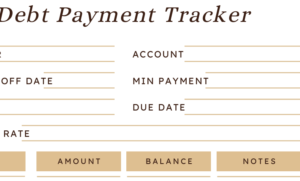
- Download or build the “Debt to Freedom Tracker.”
- Set a phone reminder to update the tracker nightly.
Grab your free Budget Planner & Debt Tracker Here.
7. Negotiate & Reduce Interest
You have more power than you think.
When to call a creditor.
- If the interest rate is high and you have on-time payments.
- If you are facing financial hardship and need a temporary break.
What to say(script)
“Hi, my name is [name]. I want to pay off my balance faster. I have been a customer since [year]. Is there a lower interest rate you can offer? I will move my balance if you can lower the rate.”
If they refuse, ask for other help.
- Ask for a hardship plan.
- Ask to waive the late fee.
- Ask about balance transfer options.
Balance transfer options
A balance transfer to a low- or zero-interest card may save interest. Read fine print. Note if there are transfer fees.
Action steps:
- Call your two largest creditors this week. Use the script.
- Record results in your tracker.
8. Build the 90-day plan
A focused 90-day plan creates momentum for you.
Structure
Day 1-7: Goal set, tracker built, one expense, one extra income action.
Day 8-30: Follow daily tracker, apply extra income to target debt, call creditors.
Day 31-60: Push with a 14-day spending freeze for non-essential items. Increase side hustle focus.
Day 61-90: Reassess. Apply any savings to the next debt. Reward your progress.
Action steps:
- Print the 90- day calendar. Mark every payday and payment.
- Each payday, move the agreed extra amount to the debt.
9. Create a Safety Net
Small emergency savings stop new debt.
Target: $500 to $1,000 to start. Place it in a separate savings account. Do not touch unless it’s a real emergency.
How to fund it
- $25 per week from reduced spending.
- One side gig payout.
- Sell some items.
Action steps
- Open a separate savings account this week.
- Set an automatic transfer each payday.
10. Create Good Money Habits
Having good money habits creates good results.
Good Habits to Have When You’re Paying Off Debt
1. Track your spending weekly
Problem: Debt grows when you don’t know where your money is going.
Solution: A weekly check‑in keeps you aware and in control.
How to apply it: Every Sunday, review the last 7 days of spending.
Insight: Weekly tracking works better than monthly because it prevents small leaks from turning into big setbacks.
2. Automate your minimum payments.
Problem: Missed payments add fees and damage your credit.
Solution: Automation removes the risk.
How to apply it: Set every debt to autopay the minimum amount.
Insight: Automation protects your progress even on stressful or busy weeks.
3. Add one small extra payment each month
Problem: Interest slows down your progress.
Solution: Even tiny extra payments reduce interest and shorten your timeline.
How to apply it: Choose a fixed amount — $20, $50, or whatever fits — and send it to your highest‑interest debt.
Insight: Consistency beats size. A small extra payment every month is more powerful than a big one once in a while.
4. Use a simple budget, not a complicated one
Problem: Overly detailed budgets cause burnout.
Solution: A simple 3‑category budget works better:
- Essentials
- Non‑essentials
Debt payoff
How to apply it: Assign a limit to each category and stick to it.
Insight: Simplicity increases consistency, and consistency pays off debt.
5. Keep a small emergency fund
Problem: Without a buffer, every surprise becomes new debt.
Solution: Save $500–$1,000 before aggressively paying off debt.
How to apply it: Put $25–$50 aside each week until you reach your buffer.
Insight: A small emergency fund helps protect your progress and reduce stress.
6. Review your debt plan once a month
Problem: Long payoff timelines feel overwhelming.
Solution: Monthly reviews keep you focused and motivated.
How to apply it: Look at your balances, interest, and progress on the same day each month.
Insight: Seeing the numbers drop — even slowly — builds momentum.
7. Avoid a lavish lifestyle when in debt
Problem: As income rises, spending rises too.
Solution: Keep your lifestyle stable until your debt is gone.
How to apply it: When you get a raise or refund, send a portion to debt.
Insight: Lifestyle creep is one of the biggest reasons people stay in debt longer than necessary.
8. Use visual progress tools
Problem: Debt feels invisible, which makes it hard to stay motivated.
Solution: Make progress visible.
How to apply it: Use a printable tracker, thermometer chart, or progress bar.
Insight: When you can see your progress, you stay committed longer.
9. Limit impulse spending with a 24‑hour rule
Problem: Impulse purchases slow down your payoff.
Solution: Delay decisions.
How to apply it: Wait 24 hours before buying anything non‑essential.
Insight: Most impulses fade when you give yourself time to think.
10. Celebrate small milestones
Problem: Debt payoff feels endless without rewards.
Solution: Celebrate progress in small, low‑cost ways.
How to apply it: Every time you pay off a balance or hit a milestone, do something enjoyable that doesn’t add new debt.
Insight: Rewards keep you emotionally invested in the journey.
Daily Habit Checklist
- Check the tracker nightly.
- No impulse buys today.
- One small saving action today.
Weekly habit checklist
- Update balances.
- Review budget.
- Reward one win that costs nothing.
Monthly habit checklist
- Review goals. Move to the next target.
- Adjust the budget for new income or bills.
- Rebalance savings bs debt payments
Action steps:
Write your habit checklist on a sticky note. Place it where you can see it daily.
11. Tools & Resources
Free and low-cost tools you can use today.
- Spreadsheets: Google Sheets debt tracker template. Build tabs for debts, budget, and payments.
- Design & Printables: Canva for worksheets and printable charts.
- Payments & Sales: PayPal and Stripe for accepting payments if you sell small products for extra income.
- Gumroad or Payhip for simple digital products.
Leaning platforms
- Thinkific or Teachable for a short course.
- ConvertKit for email funnels and lead magnets.
Support & Community: Local credit counselling services offer free guidance. Search for non-profit credit counsellors.
Online communities: Subreddit, personal finance, and finance Facebook groups. Use them for questions and accountability.
This guide is practical. It allows you to work steadily toward paying off your debt. Choose a payment method and follow it.
Frequently Asked Problems & Fixes
Problem: No money left after bills.
Fix: Do a 30-day spending audit. Cancel subscriptions. Sell items. Pick a side gig for extra income.
Problem: Creditors refuse to lower interest rates.
Fix: Consider a balance transfer if fees are lower than the interest saved. Or use the smallest balance method to remove one account quickly. Use that win to gain momentum.
Problem: You slip and spend:
Fix: Stop feeling guilty. Review the cause. Adjust your plan. Recommit yourself again. Use the habit checklist.
Top Questions People Ask When Trying to Get Out of Debt
1. Why does paying off debt feel so slow, even when I’m doing everything right?
Debt feels slow because most of your early payments go toward interest rather than principal. Once the principal starts shrinking, progress speeds up. The key is consistency — every payment reduces future interest and accelerates the timeline.
2. How do I stay motivated when I’m not seeing big changes in my balance?
Focus on small wins: track every payment, celebrate each milestone, and use visual progress tools. Motivation grows when you can see your progress, even if the numbers move slowly.
3. What’s the best way to choose which debt to pay off first?
Most people use either:
- Debt Snowball — smallest balance first (best for motivation)
- Debt Avalanche — highest interest first (best for saving money)
- Choose the method that keeps you consistent. Consistency matters more than the method.
4. How do I stop myself from giving up halfway through my debt‑free journey?
Create a simple system: weekly check‑ins, automatic payments, and a clear payoff plan. When the process is structured, you rely less on motivation and more on routine.
5. What should I do when unexpected expenses slow down my debt payoff?
Pause, adjust, and protect your progress. Build a small emergency fund ($500–$1,000), so surprises don’t push you back into debt. Then resume your plan without guilt.
6. How do I avoid going back into debt once I finally pay everything off?
Build habits that keep you stable:
- Track spending weekly
- Keep a small emergency fund
- Use a simple budget
Avoid a lavish lifestyle if you can’t afford it
- Debt freedom is a habit, not a one‑time event.
7. What if my income is too low to make real progress?
Start with what you can control: spending, budgeting, and small extra payments. Even $20–$50 extra per month reduces interest and shortens your timeline. If possible, add temporary income boosts — but don’t rely on them long‑term.
8. How do I stay focused when my debt payoff will take years?
Break the journey into phases:
- Phase 1: Build momentum
- Phase 2: Stay consistent
- Phase 3: Protect progress
- Phase 4: Finish strong
- Shorter phases make a long journey feel manageable.
9. What’s the biggest mistake people make when trying to get out of debt?
Trying to change everything at once. Debt payoff works best when you simplify: one plan, one method, one set of habits you can stick to.
10. How do I stay positive when I feel ashamed or overwhelmed by my debt?
Never feel ashamed. Debt is a situation, not who you are. Every payment is proof that you’re taking control, and that’s something to be proud of.